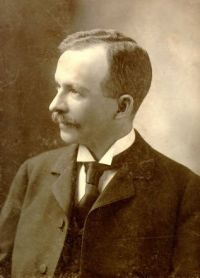
Charles W. Chesnutt

Charles W. Chesnutt

Summary

Portrait of Charles W. Chesnutt Charles W. Chesnutt The Marrow of Tradition — XXXIV. (1901)

At such a time, in the white man's eyes, a negro's courage would be mere desperation; his love of liberty, a mere animal dislike of restraint. Every finer human instinct would be interpreted in terms of savagery. Or, if forced to admire, they would none the less repress. They would applaud his courage while they stretched his neck, or carried off the fragments of his mangled body as souvenirs, in much the same way that savages preserve the scalps or eat the hearts of their enemies.
But concern for the fate of Josh and his friends occupied only a secondary place in Miller's mind for the moment.
Source: Wikisource

Portrait of Charles W. Chesnutt Charles W. Chesnutt The Marrow of Tradition — XXXIV. (1901)

They went their way, and Miller hurried on. They might resist attack; he thought it extremely unlikely that they would begin it; but he knew perfectly well that the mere knowledge that some of the negroes contemplated resistance would only further inflame the infuriated whites. The colored men might win a momentary victory, though it was extremely doubtful; and they would as surely reap the harvest later on. The qualities which in a white man would win the applause of the world would in a negro be taken as the marks of savagery.
Source: Wikisource

Get perspective with Kwize: daily news enlightened by great literature