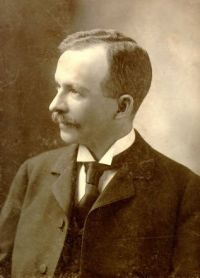
Charles W. Chesnutt

Charles W. Chesnutt

Summary

Portrait of Charles W. Chesnutt Charles W. Chesnutt The Marrow of Tradition — V. (1901)

The negro was here before the Anglo-Saxon was evolved, and his thick lips and heavy-lidded eyes looked out from the inscrutable face of the Sphinx across the sands of Egypt while yet the ancestors of those who now oppress him were living in caves, practicing human sacrifice, and painting themselves with woad--and the negro is here yet.
"'Blessed are the meek,'" quoted Miller at the end of these consoling reflections, "'for they shall inherit the earth.' If this be true, the negro may yet come into his estate, for meekness seems to be set apart as his portion."
Source: Wikisource

Portrait of Charles W. Chesnutt Charles W. Chesnutt The Marrow of Tradition — V. (1901)

Toward evening the train drew up at a station where quite a party of farm laborers, fresh from their daily toil, swarmed out from the conspicuously labeled colored waiting-room, and into the car with Miller. They were a jolly, good-natured crowd, and, free from the embarrassing presence of white people, proceeded to enjoy themselves after their own fashion.
Source: Wikisource

Portrait of Charles W. Chesnutt Charles W. Chesnutt The Marrow of Tradition — V. (1901)

He could easily imagine that people of refinement, with the power in their hands, might be tempted to strain the democratic ideal in order to avoid such contact; but personally, and apart from the mere matter of racial sympathy, these people were just as offensive to him as to the whites in the other end of the train. Surely, if a classification of passengers on trains was at all desirable, it might be made upon some more logical and considerate basis than a mere arbitrary, tactless, and, by the very nature of things, brutal drawing of a color line.
Source: Wikisource

Get perspective with Kwize: daily news enlightened by great literature