Summary

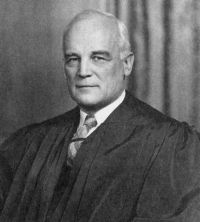
Portrait of Harold Hitz Burton Harold Hitz Burton Henderson v. United States — Opinion of the Court

The issue before us, as in the Mitchell case, is whether the railroad's current rules and practices cause passengers to be subjected to undue or unreasonable prejudice or disadvantage in violation of § 3 (1) . We find that they do.
The right to be free from unreasonable discriminations belongs, under § 3 (1) , to each particular person. Where a dining car is available to passengers holding tickets entitling them to use it, each such passenger is equally entitled to its facilities in accordance with reasonable regulations.
Source: Wikisource

Portrait of Harold Hitz Burton Harold Hitz Burton Henderson v. United States — Opinion of the Court

The denial of dining service to any such passenger by the rules before us subjects him to a prohibited disadvantage. Under the rules, only four Negro passengers may be served at one time and then only at the table reserved for Negroes. Other Negroes who present themselves are compelled to await a vacancy at that table, although there may be many vacancies elsewhere in the diner. The railroad thus refuses to extent to those passengers the use of its existing and unoccupied facilities.
Source: Wikisource

Portrait of Harold Hitz Burton Harold Hitz Burton Henderson v. United States — Opinion of the Court

That the regulations may impose on white passengers, in proportion to their numbers, disadvantages similar to those imposed on Negro passengers is not an answer to the requirements of § 3 (1) . Discriminations that operate to the disadvantage of two groups are not the less to be condemned because their impact is broader than if only one were affected.
Source: Wikisource

Get perspective with Kwize: daily news enlightened by great literature