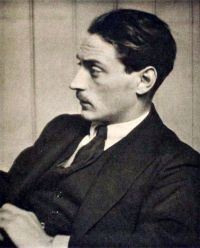
Compton MacKenzie

Compton MacKenzie

Summary

Portrait of Compton MacKenzie Compton MacKenzie The Seven Ages of Woman

But when François had arranged to his satisfaction the folds of the brocaded curtains and when he had turned on the lights and left the room in a radiancy of rose, Mary could not think about what she called practical things, which meant the séance she had arranged for to-night. Her headache was gone; but the shadows of the past which had crept out of their lurking-places in the twilight were still in the salon, not visible indeed, but all the more hauntingly insistent because they were not visible. The room seemed vaster and lonelier now that every corner of it was illuminated.
Source: Gutenberg

Portrait of Compton MacKenzie Compton MacKenzie The Seven Ages of Woman

Should she when at last she lay dying, for though the attempt to realize the inevitableness of death caught the breath and eluded the mind's grasp, the ultimate death of herself was a fact that must be believed, should she in that solemn hour ask a granddaughter—Richard's or dear fat Geoffrey's child—such questions as her own grandmother had asked her? Should she when an old woman look back at her life with doubt and forward to the grave with apprehension?
Source: Gutenberg

Portrait of Compton MacKenzie Compton MacKenzie The Seven Ages of Woman

Mary protested.
Two days later she met Pierre by the banks of the Serpentine on a May noon that held the city in a web of silver. The tall houses of Bayswater, reflected in that shimmering expanse of water, appeared like the battlements of an enchanted palace above the trees that masked their prosaic beginnings. The white peacocks haunting the slopes toward Hyde Park made one feel that life was a dream and that the children and nurses, the meditative loiterers, even the old maids with their pet dogs, would all presently be turned into birds to fly above this cloud-cuckoo-town of London.
Source: Gutenberg

Get perspective with Kwize: daily news enlightened by great literature