Summary

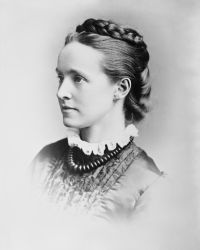
Portrait of Dame Millicent Garrett Fawcett Dame Millicent Garrett Fawcett The Women's Victory—and After: Personal Reminiscences…

If the vote makes no difference, why have our race all over the world attached such enormous importance to it? It is bred in our bone, and will never come out of the flesh, that the possession of the franchise is the very foundation-stone of political freedom. Our fifty years' struggle for the women's vote was not actuated by our setting any extraordinary value on the mere power of making a mark on a voting paper once in every three or four years. We did not, except as a symbol of free citizenship, value it as a thing good in itself
Source: Gutenberg

Portrait of Dame Millicent Garrett Fawcett Dame Millicent Garrett Fawcett The Women's Victory—and After: Personal Reminiscences…

It is as if from the central heart of life a ray broke suddenly upon the world, inspiring men to feel deeply, to live greatly, to do nobly. It makes men. It is not made by men."
Without belittling the importance of the wave of enthusiasm for women's enfranchisement which swept over the English-speaking world in 1916, it is impossible to disguise the fact that we in England won our battle at the exact moment we did in consequence of the absolute necessity under which the Government laboured of producing a new parliamentary register and a new voting qualification for men.
Source: Gutenberg

Portrait of Dame Millicent Garrett Fawcett Dame Millicent Garrett Fawcett The Women's Victory—and After: Personal Reminiscences…

In 1915, however, it was from every point of view of the first importance to get the trade union embargo on women's labour removed; and when it was removed, instantly evidence began to pour in of the high productivity of women's work. It was almost ridiculous to watch the amazement of the ordinary man when he saw how rapidly women learned men's jobs, and how, by their patriotic zeal and entire innocence of the trade union practice of ca' canny, their output frequently exceeded, and exceeded largely, the output of men working the same machinery for the same number of hours.
Source: Gutenberg

Get perspective with Kwize: daily news enlightened by great literature