Summary

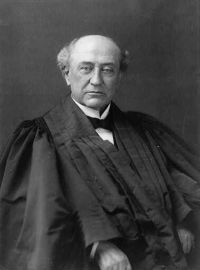
Portrait of David Josiah Brewer David Josiah Brewer Chrisman v. Miller — Opinion of the Court

It is true that, when the controversy is between two mineral claimants, the rule respecting the sufficiency of a discovery of mineral is more liberal than when it is between a mineral claimant and one seeking to make an agricultural entry, for the reason that where land is sought to be taken out of the category of agricultural lands the evidence of its mineral character should be reasonably clear, while in respect to mineral lands, in a controversy between claimants, the question is simply which is entitled to priority.
Source: Wikisource

Portrait of David Josiah Brewer David Josiah Brewer Chrisman v. Miller — Opinion of the Court

The mineral must exist in such quantities as to justify expenditure of money for the development of the mine and the extraction of the mineral.' And again (p. 424, L. ed. p. 211, Sup. Ct. Rep. p. 552) : 'It is not every vein or lode which may show traces of gold or silver that is exempted from sale or patent of the ground embracing it, but those only which possess these metals in such quantity as to enhance the value of the land and invite the expenditure of time and money for their development.
Source: Wikisource

Portrait of David Josiah Brewer David Josiah Brewer Chrisman v. Miller — Opinion of the Court

But it has no foundation in fact, for, as found by the trial and held by the supreme court of the state, the attempted location by Barieau and his associates in June, 1895, was a failure by reason of a lack of discovery. We have already quoted the declaration of the supreme court. The testimony referred to in that quotation, even if true, does not overthrow the finding. It does not establish a discovery. It only suggests a possibility of mineral of sufficient amount and value to justify further exploration.
Source: Wikisource

Get perspective with Kwize: daily news enlightened by great literature