Summary

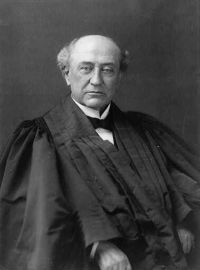
Portrait of David Josiah Brewer David Josiah Brewer Ford v. Delta Pine Land Company…

Inasmuch as we have seen the auditor's deeds are not to be taken as an adjudication that such levee taxes had been paid by the railroad company, and as it was, under the true construction of the statute of 1867, the intent of the legislature that, in addition to the 2 per cent. for general taxes, all levee assessments should be paid and discharged by the railroad company, and as there is no evidence before us that such payment and discharge was made, it follows that all the title acquired by the levee board under the act of 1867 has passed to the defendant.
Source: Wikisource

Portrait of David Josiah Brewer David Josiah Brewer Ford v. Delta Pine Land Company…

But, passing that, it is clear that even if the exemption is properly construed, as applying not only to the property necessary for the business of the railroad company, but also to all other property which, by the terms of its charter, it was at liberty to acquire, it does not extend to property which, not necessary for its business, it acquired under the authority of a subsequent act of the legislature, in which is found no exemption clause.
Source: Wikisource

Portrait of David Josiah Brewer David Josiah Brewer Ford v. Delta Pine Land Company…

The auditor sold and conveyed at two cents an acre for all state and county taxes, i. e. all taxes which the state had full authority over, and which it could compromise at any sum. The levee board held the lands in trust, and the company was required to pay all levee taxes in full, either in cash or in levee bonds, the obligations for which the lands were sold. The two tribunals acted separately. Neither's action was conditioned upon that of the other; and proof of the action of one is no evidence of the action of the other.
Source: Wikisource

Get perspective with Kwize: daily news enlightened by great literature