Summary

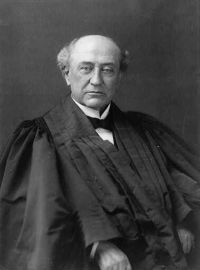
Portrait of David Josiah Brewer David Josiah Brewer New Orleans Company v. Jopes — Opinion of the Court

If the immediate actor is free from responsibility because his act was lawful, can his employer-one taking no direct part in the transaction-be held responsible? Suppose we eliminate the employe, and assume a case in which the carrier has no servants, and himself does the work of carriage, should he assault and wound a passenger in the manner suggested by the instruction, it is undeniable that, if sued as an individual, he would be held free from responsibility, and the act adjudged lawful.
Source: Wikisource

Portrait of David Josiah Brewer David Josiah Brewer New Orleans Company v. Jopes — Opinion of the Court

There is no misconduct when a conductor uses force and does injury simply in self-defense; and the rules which determine what is self-defense are of universal application, and are not affected by the character of the employment in which the party is engaged. Indeed, while the courts hold that the liability of a common carrier to his passengers for the assaults of his employes is of a most stringent character, far greater than that of ordinary employers for the actions of their employes, yet they all limit the liability to cases in which the assault and injury are wrongful.
Source: Wikisource

Portrait of David Josiah Brewer David Josiah Brewer New Orleans Company v. Jopes — Opinion of the Court

It will be scarcely doubted that if the conductor was prosecuted criminally, it would be a sufficient defense that he honestly believed he was in imminent danger, and had reasonable ground for such belief. In other words, the law of self-defense justifies an act done in honest and reasonable belief of immediate danger. The familiar illustration is that, if one approaches another, pointing a pistol, and indicating an intention to shoot, the latter is justified by the rule of self-defense in shooting, even to death
Source: Wikisource

Get perspective with Kwize: daily news enlightened by great literature