Summary

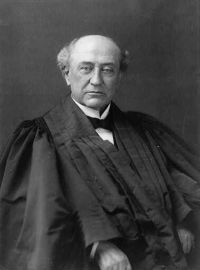
Portrait of David Josiah Brewer David Josiah Brewer New Orleans v. Stemple — Opinion of the Court

When the question is whether property is exempt from taxation, and that exemption depends alone on a true construction of a statute of the state, the Federal courts should be slow to declare an exemption in advance of any decision by the courts of the state. The rule in such a case is that the Federal courts follow the construction placed upon the statute by the state courts, and in advance of such construction they should not declare property beyond the scope of the statute and exempt from taxation unless it is clear that such is the fact.
Source: Wikisource

Portrait of David Josiah Brewer David Josiah Brewer New Orleans v. Stemple — Opinion of the Court

It certainly does not exist where the debtor may be and follow his person. And while, for some purposes in the law, by legal fiction, it follows the person of the creditor and exists where he may be, yet it has been settled that for the purpose of taxation this legal fiction does not, to the full extent, apply, and that such property belonging to a nonresident creditor may be taxed in the place where the obligations are held by his agent.
Source: Wikisource

Portrait of David Josiah Brewer David Josiah Brewer New Orleans v. Stemple — Opinion of the Court

If we look to the decisions of other states we find the frequent ruling that when an indebtedness has taken a concrete form and become evidenced by note, bill, mortgage, or other written instrument, and that written instrument evidencing the indebtedness is left within the state in the hands of an agent of the nonresident owner, to be by him used for the purposes of collection and deposit or reinvestment within the state, its taxable situs is in the state.
Source: Wikisource

Get perspective with Kwize: daily news enlightened by great literature