Summary

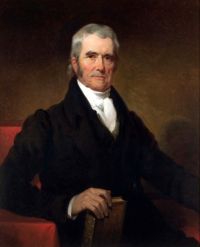
Portrait of John Marshall John Marshall Field v. United States — Opinion of the Court

Every citizen is bound to know the law of the land, and if state legislatures will pass laws which cannot be enforced as against the United States, and thereby entrap the citizen, he has himself and them to blame, but cannot censure the general government which had previously told both them and him that the interests of the whole are paramount to those of the individual, and especially in the collection of the very money which is indispensable to the existence of the general government.
Source: Wikisource

Portrait of John Marshall John Marshall Field v. United States — Opinion of the Court

That in virtue of said proceedings, under the local laws of Louisiana, the said property so assigned was sold by said syndics on a credit of one, two and three years; that out of the proceeds of sale, when the same shall be received, are to be paid certain privileged and mortgaged creditors, who are preferred to the United States.
The answers further state that the respondents have no funds in their hands belonging to the estate of L. E. Brown; the property having been so sold, on a credit for promissory notes not yet due or paid.
Source: Wikisource

Get perspective with Kwize: daily news enlightened by great literature