Summary

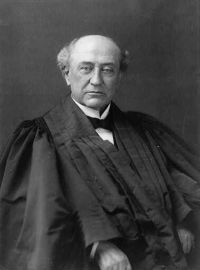
Portrait of David Josiah Brewer David Josiah Brewer Pleasant Tp v. Aetna Life Insurance Company…

Business may demand the one; convenience alone supports the other. The justification of the one is in the private and business element which enters into a municipal corporation proper, the absence of which element in a quasi corporation, like a township, forbids its investment in railroad enterprises. A railroad is a highway, but its character and mode of use make a large distinction between it and other highways.
Source: Wikisource

Portrait of David Josiah Brewer David Josiah Brewer Pleasant Tp v. Aetna Life Insurance Company…

It is one thing for a large city, with its concentration of business interests, to build, equip, and own a great railroad highway running from such center outward into other districts, rapid and easy communication with which advances its business interests; and it is a very different thing for a quasi municipal corporation, like a township, with its sparse population, and its lack of concentration of business interests, to construct a few miles of railroad through its territory.
Source: Wikisource

Portrait of David Josiah Brewer David Josiah Brewer Pleasant Tp v. Aetna Life Insurance Company…

A few miles of track, unequipped with rolling stock, and disconnected from other lines of track, are absolutely worthless. An ordinary high way through a township, although disconnected at either end with other highways, is of practical benefit and substantial use to the people of the township but it is not so with a railroad track. Only in a lengthened line, with rolling-stock equipment, does a railroad become a thing of value. The act of 1869 contemplated for the city of Cincinnati a lengthened line, with rolling-stock equipment, and made ample provisions therefor.
Source: Wikisource

Get perspective with Kwize: daily news enlightened by great literature