Summary

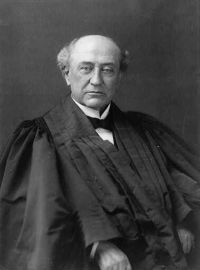
Portrait of David Josiah Brewer David Josiah Brewer St. Louis v. Western Union Telephone Company…

While a grant from one government may supersede and abridge franchises and rights held at the will of its grantor, it cannot abridge any property rights of a public character created by the authority of another sovereignty. No one would suppose that a franchise from the federal government to a corporation, state or national, to construct interstate roads or lines of travel, transportation, or communication, would authorize it to enter upon the private property of an individual, and appropriate it without compensation.
Source: Wikisource

Portrait of David Josiah Brewer David Josiah Brewer St. Louis v. Western Union Telephone Company…

But the use made by the telegraph company is, in respect to so much of the space as it occupies with its poles, permanent and exclusive. It as effectually and permanently dispossesses the general public as if it had destroyed that amount of ground. Whatever benefit the public may receive in the way of transportation of messages, that space is, so far as respects its actual use for purposes of a highway and personal travel, wholly lost to the public.
Source: Wikisource

Portrait of David Josiah Brewer David Josiah Brewer St. Louis v. Western Union Telephone Company…

If, within a few blocks of Wall street, New York, the telegraph company should place on the public streets 1,500 of its large telegraph poles, it would seem as though no court could declare that five dollars a pole was an excessive annual rental for the ground so exclusively appropriated; while, on the other hand, a charge for a like number of poles in a small village, where space is abundant and land of little value, would be manifestly unreasonable, and might be so excessive as to be void.
Source: Wikisource

Get perspective with Kwize: daily news enlightened by great literature