Summary

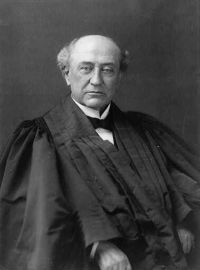
Portrait of David Josiah Brewer David Josiah Brewer United States v. Grimley — Opinion of the Court

No more can an enlisted soldier avoid a charge of desertion, and escape the consequences of such act, by proof that he was over age at the time of enlistment, or that he was not able-bodied, or that he had been convicted of a felony, or that before his enlistment he had been a deserter from the military service of the United States. These are matters which do not inhere in the substance of the contract, do not prevent a change of status, do not render the new relations assumed absolutely void; and in the case of a soldier, these considerations become of vast public importance.
Source: Wikisource

Portrait of David Josiah Brewer David Josiah Brewer United States v. Grimley — Opinion of the Court

While our regular army is small compared with those of European nations, yet its vigor and efficiency are equally important. An army is not a deliberative body. It is the executive arm. Its law is that of obedience. No question can be left open as to the right to command in the officer, or the duty of obedience in the soldier. Vigor and efficiency on the part of the officer, and confidence among the soldiers in one another, are impaired if any question be left open as to their attitude to each other.
Source: Wikisource

Portrait of David Josiah Brewer David Josiah Brewer United States v. Grimley — Opinion of the Court

The parties remain husband and wife no matter what their conduct to each other,-no matter how great their disregard of marital obligations. It is true that courts have power, under the statutes of most states, to terminate those contract obligations, and put an end to the marital relations. But this is never done at the instance of the wrong-door. The injured party, and the injured party alone, can obtain relief and a change of status by judicial action. So, also, a foreigner by naturalization enters into new obligations.
Source: Wikisource

Get perspective with Kwize: daily news enlightened by great literature