Summary

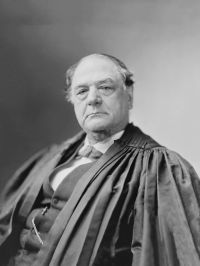
Portrait of Noah Haynes Swayne Noah Haynes Swayne Ex Parte Reed — Opinion of the Court

We do not overlook the point that there must be jurisdiction to give the judgment rendered, as well as to hear and determine the cause. If a magistrate having authority to fine for assault and battery should sentence the offender to be imprisoned in the penitentiary, or to suffer the punishment prescribed for homicide, his judgment would be as much a nullity as if the preliminary jurisdiction to hear and determine had not existed. Every act of a court beyond its jurisdiction is void.
Source: Wikisource

Portrait of Noah Haynes Swayne Noah Haynes Swayne Ex Parte Reed — Opinion of the Court

Here there was no defect of jurisdiction as to any thing that was done. Beyond this we need not look into the record. Whatever was done, that the court could do under any circumstances, we must presume was properly done. If error was committed in the rightful exercise of authority, we cannot correct it.
A writ of habeas corpus cannot be made to perform the functions of a writ of error. To warrant the discharge of the petitioner, the sentence under which he is held must be, not merely erroneous and voidable, but absolutely void.
Source: Wikisource

Portrait of Noah Haynes Swayne Noah Haynes Swayne Ex Parte Reed — Opinion of the Court

The questions we are called on to consider are all questions of law. A brief summary of the facts will therefore be sufficient.
The petitioner, Reed, was the clerk of a paymaster in the navy of the United States. He was duly appointed, and had accepted by a letter, wherein, as required, he bound himself 'to be subject to the laws and regulations for the government of the navy and the discipline of the vessel.' His name was placed on the proper muster-roll, and he entered upon the discharge of his duties.
Source: Wikisource

Get perspective with Kwize: daily news enlightened by great literature