Summary

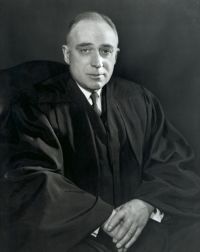
Portrait of John Marshall Harlan II John Marshall Harlan II Noyd v. Bond (395 U.S. 683) — Opinion of the Court

If the military courts do vindicate petitioner's claim, there will be no need for civilian judicial intervention. Needless friction will result if civilian courts throughout the land are obliged to review comparable decisions of military commanders in the first instance. Moreover, if we were to reach the merits of petitioner's claim for relief pending his military appeal, we would be obliged to interpret extremely technical provisions of the Uniform Code which have no analogs in civilian jurisprudence, and which have not even been fully explored by the Court of Military Appeals itself.
Source: Wikisource

Portrait of John Marshall Harlan II John Marshall Harlan II Noyd v. Bond (395 U.S. 683) — Opinion of the Court

Article 57 (b) , then, represents Congress' decision that even though a man is temporarily set at liberty, he should be given sentence credit unless he is sure that his freedom will not be curtailed at a later date without a plenary hearing. Obviously, the statute's purpose will not be served in the present case, where Captain Noyd's liberty will only be limited once again after a full argument before the judiciary.
Source: Wikisource

Portrait of John Marshall Harlan II John Marshall Harlan II Noyd v. Bond (395 U.S. 683) — Opinion of the Court

Nevertheless other considerations require a substantial degree of civilian deference to military tribunals. In reviewing military decisions, we must accommodate the demands of individual rights and the social order in a context which is far removed from those which we encounter in the ordinary run of civilian litigation, whether state or federal.
Source: Wikisource

Get perspective with Kwize: daily news enlightened by great literature