Summary

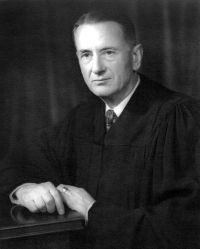
Portrait of Charles Evans Whittaker Charles Evans Whittaker Kinsella v. United States — Dissent

Doubtless, with the passing of the frontier and the extension of civil courts throughout the territorial boundaries of the United States, detachments of troops stationed within our borders may not in time of peace be regarded as 'in the field.' But, it seems to me that armed forces of the United States stationed at bases in foreign lands-where jurisdiction of our civil courts does not extend-must, under turbulent world conditions, be otherwise regarded.
Source: Wikisource

Portrait of Charles Evans Whittaker Charles Evans Whittaker Kinsella v. United States — Dissent

There would seem to be no doubt that Congress may constitutionally prescribe gradations of offenses and punishments in military cases. The question is solely whether Clause 14 has granted to Congress any power to provide for the court-martial trial and punishment of civilian dependents 'accompanying,' and civilians 'employed by,' the armed forces at military posts in foreign lands in time of peace.
Source: Wikisource

Portrait of Charles Evans Whittaker Charles Evans Whittaker Kinsella v. United States — Dissent

Because of longexisting world tensions and with the fervent hope of preventing worse, the United States Government has stationed armed forces at military bases in 63 foreign lands throughout the world. We are told that they must be kept constantly alert and ready to prevent or, if and when they arise, to put down 'brush fires' which if allowed to spread might ignite a world-wide holocaust of atomic war. Because of physical necessities, such a war, like the frequently recurring 'brush fires,' could be suppressed, if at all, mainly from those bases.
Source: Wikisource

Get perspective with Kwize: daily news enlightened by great literature