Summary

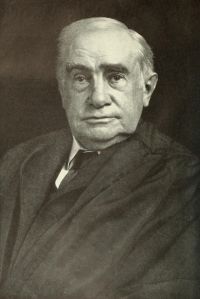
Portrait of Henry Billings Brown Henry Billings Brown Bishop v. United States — Opinion of the Court

The proceedings of the court-martial were conducted with a substantial, if not a literal, conformity to the law, and we must presume, at least, that there was sufficient evidence to support the sentence. While drunkenness is not ordinarily considered as criminal, the intoxication of a naval officer while on duty is a gross breach of discipline, and liable to be attended by very serious consequences. Congress evidently acted with forbearance and generosity in reinstating petitioner in the service after a lapse of three years, and thereby condoned the offense.
Source: Wikisource

Portrait of Henry Billings Brown Henry Billings Brown Bishop v. United States — Opinion of the Court

It is quite evident that the words 'arrest, suspension, or confinement,' in ¶ 1205, contemplate an action in the nature of a punishment, upon the infliction of which the offense is to be regarded as expiated; but as the order restoring Bishop to duty was on its face merely to give 'time to investigate the case,' we do not think the order of suspension could have been intended as a punishment in itself, or as an expiation of the previous offense, nor did the order of Admiral Bell 'entirely discharge' the accused within the meaning of ¶ 1205 of the Navy Regulations.
Source: Wikisource

Get perspective with Kwize: daily news enlightened by great literature