Summary

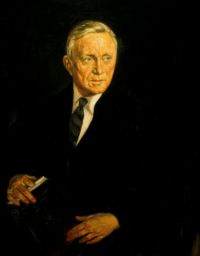
Portrait of William O. Douglas William O. Douglas Billings v. Truesdell — Opinion of the Court

We are not concerned with the wisdom of either the 'actually inducted' clause in § 11 or the procedure for selection and induction which has been prescribed under the Act. Nor is it for us to decide whether the maximum penalty provided by Congress is adequate for those who flout the Act while the nation fights for its very existence. But where Congress has drawn the line between civil and military jurisdiction it is our duty to respect it.
Source: Wikisource

Portrait of William O. Douglas William O. Douglas Billings v. Truesdell — Opinion of the Court

No man shall be 'inducted for training and service under this Act unless and until he is acceptable' to the armed services. § 3 (a) . And the civil authorities retain jurisdiction over him until he is 'actually inducted'. § 11. Thus it seems clear, as we have already said, that the Act, rather than the War Department Regulations or the Articles of War, determines the rights and duties of selectees, as distinguished from inducted men. The manner and method of effecting an induction into the Army are thus left for the War Department.
Source: Wikisource

Portrait of William O. Douglas William O. Douglas Billings v. Truesdell — Opinion of the Court

Under the Selective Service Act of 1940 unlike that of 1917, a selectee is not subject to trial by a military court martial until he has been 'actually inducted' for training and service. But Congress did not define when he was so 'inducted'. It thus left to judicial construction when the civilian status ceased and the military status began.
Source: Wikisource

Get perspective with Kwize: daily news enlightened by great literature