Summary

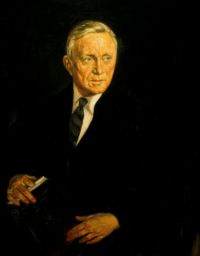
Portrait of William O. Douglas William O. Douglas Ehlert v. United States — Dissent

Since conscientious objection to war is the basis for a deferment, it must constitute a 'circumstance' within the plain meaning of the regulation. The question, therefore, is whether that circumstance can be one 'over which the registrant had no control.' On that score, I fully agree with the dissent of Judge Merrill below:
'One simply cannot order his conscience to be still or make himself believe what he does not believe and I must reject the implication that it is right and proper that one should suffer loss of status for having failed to bring his conscience to heel.
Source: Wikisource

Portrait of William O. Douglas William O. Douglas Ehlert v. United States — Dissent

Moreover, proof of a conscientious objector's claim will usually be much more difficult after induction than before. Military exigencies may take him far from his neighborhood, the only place where he can find the friends and associates who know him. His chances of having a fair hearing are therefore lessened when the hearing on his claim is relegated to in-service procedures. For these reasons I would resolve any ambiguities in the law in favor of pre-induction review of his claim and not relegate him to the regime where military philosophy, rather than the First Amendment, is supreme.
Source: Wikisource

Get perspective with Kwize: daily news enlightened by great literature