Summary

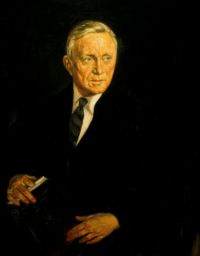
Portrait of William O. Douglas William O. Douglas Estep v. United States — Opinion of the Court

If a local board ordered a member of Congress to report for induction, or if it classified a registrant as available for military service, because he was a Jew, or a German, or a Negro, it would act in defiance of the law. If a local board refused to reopen on the written request of the State Director a registrant's classification and refused to cancel its order to report for induction, it would be acting in the teeth of the regulations. In all such cases its action would be lawless and beyond its jurisdiction.
Source: Wikisource

Portrait of William O. Douglas William O. Douglas Estep v. United States — Opinion of the Court

Congress entrusted the administration of the Selective Service System to civilian agencies, not to the military. It authorized the President to create and establish a Selective Service System and to establish civilian local boards and appeal boards to administer it. § 10 (a) (2) . The Selective Service System was designed to 'provide for the classification of registrants and of persons who volunteer for induction under this Act on the basis of availability for training and service.' Id.
Source: Wikisource

Get perspective with Kwize: daily news enlightened by great literature