Summary

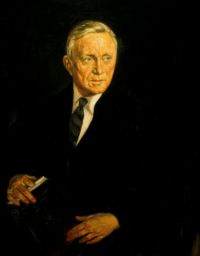
Portrait of William O. Douglas William O. Douglas Gutknecht v. United States — Opinion of the Court

The Director of Selective Service described the 'delinquency' regulations as designed 'to prevent, wherever possible, prosecutions for minor infractions of rules' during the selective service processing. [7] We search the Act in vain for any clues that Congress desired the Act to have punitive sanctions apart from the criminal prosecutions specifically authorized. Nor do we read it as granting personal privileges that may be forfeited for transgressions that affront the local board. If federal or state laws are violated by registrants, they can be prosecuted.
Source: Wikisource

Portrait of William O. Douglas William O. Douglas Gutknecht v. United States — Opinion of the Court

The action taken against this petitioner, however, did not involve classification. The term 'classification' is used exclusively in the regulations to refer to classification in one of the classes determining availability for service, e.g., I-A, I-O. See 32 CFR pts. 1621-1623. 'Delinquency' is not such a classification, and a registrant is 'declared' a delinquent, not 'classified' as a delinquent. See 32 CFR pt. 1642.
The right to reopen his classification is also irrelevant to petitioner as he is not attacking his classification, but only his accelerated induction.
Source: Wikisource

Portrait of William O. Douglas William O. Douglas Gutknecht v. United States — Opinion of the Court

If it was determined that the delinquency was 'wilful' or that for any reason the United States Attorney should not exercise his discretion not to prosecute, the registrant was given an opportunity to avoid prosecution by 'volunteering' for induction.
' (T) he registrant could volunteer for induction from any classification, not just I-A, any time he so desired, and if he was a delinquent under prosecution such volunteering was often allowed from any stage of the proceedings.' Ibid.
Source: Wikisource

Get perspective with Kwize: daily news enlightened by great literature