Summary

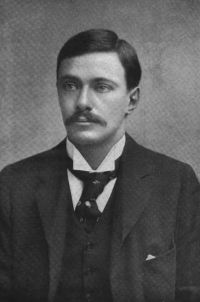
Portrait of E. F. Benson E. F. Benson The Confession of Charles Linkworth (1912)

The prison chaplain who had attended him had done his utmost to get him to confess, but his efforts had been quite ineffectual, and to the last he asserted, though without protestation, his innocence. On a bright September morning, when the sun shone warm on the terrible little procession that crossed the prison yard to the shed where was erected the apparatus of death, justice was done, and Dr. Teesdale was satisfied that life was immediately extinct.
Source: Wikisource

Portrait of E. F. Benson E. F. Benson The Confession of Charles Linkworth (1912)

Teesdale was a bachelor and a man of independent means, and lived in a tall-windowed and commodious house in Bedford Square, where a plain cook of surpassing excellence looked after his food, and her husband his person. There was no need for him to practise a profession at all, and he performed his work at the prison for the sake of the study of the minds of criminals. Most crime—the transgression, that is, of the rule of conduct which the human race has framed for the sake of its own preservation—he held to be either the result of some abnormality, of the brain or of starvation.
Source: Wikisource

Portrait of E. F. Benson E. F. Benson The Confession of Charles Linkworth (1912)

As a rule, too, their power of making themselves seen or heard or felt grew greater for some little while after death, subsequently growing weaker as they became less earth-bound, or often after that ceasing altogether, and he was prepared to-night for a less indistinct impression. The spirit apparently for the early hours of its disembodiment is weak, like a moth newly broken out from its chrysalis—and then suddenly the telephone bell rang, not so faintly as the night before, but still not with its ordinary imperative tone.
Dr. Teesdale instantly got up, put the receiver to his ear.
Source: Wikisource

Get perspective with Kwize: daily news enlightened by great literature