Summary

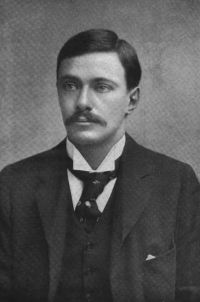
Portrait of E. F. Benson E. F. Benson The Room in the Tower and Other Stories… (1912)

Even as I went in something seemed to push by me, something soft and slimy. It could not be Louis' imagination this time. Since then I have seen glimpses of it every evening. I am awakened at night by tappings, and in the shadows in the corner of my room there sits something more substantial than a shadow."
Within an hour of my leaving Dr Assheton, the quiet street was once more aroused by cries of terror and agony. He was already dead, and in no other manner than his friend, when they got into the house.
Source: Wikisource

Portrait of E. F. Benson E. F. Benson The Room in the Tower and Other Stories… (1912)

But at bottom, the two men had this compelling interest in common, namely, an insatiable curiosity after the unknown, perhaps the most potent bond yet devised between the solitary units that make up the race of man. Both—till the end—were absolutely fearless, and Dr Assheton would sit by the bedside of the man stricken with bubonic plague to note the gradual surge of the tide of disease to the reasoning faculty with the same absorption as Fielder would study X-rays one week, flying machines the next, and spiritualism the third.
Source: Wikisource

Portrait of E. F. Benson E. F. Benson The Room in the Tower and Other Stories… (1912)

Above all, I remembered from Cambridge days, what Louis' "dropping in" meant. Towards bed-time, when work was over, there would come a rapid step on the landing, and for an hour, or two hours, he would gush with ideas. He simply diffused life, which is ideas, wherever he went. He fed one"s brain, which is the one thing which matters. Most people who are ill, are ill because their brain is starving, and the body rebels, and gets lumbago or cancer. That is the chief doctrine of my work such as it has been. All bodily disease springs from the brain.
Source: Wikisource

Get perspective with Kwize: daily news enlightened by great literature