Summary

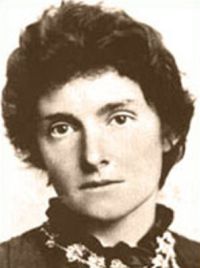
Portrait of E. Nesbit E. Nesbit Daphne in Fitzroy Street — XIV … (1909)

Daphne arranged herself in a perfect pose—a pose completed in the mere act of permitting one of the dull leather chairs to support her eight stone odd of slender young womanhood, and the clerks in their hutches of brass and mahogany felt that this was indeed June. The selfish ones, biting the feathers of their pens, hoped that the Old Boy would not hurry himself—those capable of a really unselfish passion felt that it would be a shame if the Old Buffer should keep her waiting.
Source: Wikisource

Portrait of E. Nesbit E. Nesbit Daphne in Fitzroy Street — XIV … (1909)

Daphne would, in fact, if Uncle Hamley should prove amenable, be more free than ever to “live her own life,” an exercise which now seemed to hold more possibilities than she cared at the moment to analyse. Because now there would be someone to look after Doris—someone who could be trusted—and no remorse for neglecting the child could mingle with the intense retrospective satisfaction of having, say, sat for the sketch-club, or gone to tea with a Russian, or visited a picture gallery in company with Green Eyes, or exchanged a few words with a charcoal-covered artist whom she disliked.
Source: Wikisource

Portrait of E. Nesbit E. Nesbit Daphne in Fitzroy Street — XIV … (1909)

The one alleviation to the tedium of an articled clerk’s professional life is the possibility of interest always latent in clients. Some clients are comic, some contemptible. There is the angry client, always a boon—also there is the incoherent client, sometimes a joke. But the really perfect client, a rare bird flitting but too seldom across the Fields of Lincoln’s Inn, is the radiant young woman with whom a whole office full of clerks can fall in love, without effort or, of course, hope. Such was Daphne in her clay-coloured, rough silk, and the hat that was a rose garden.
Source: Wikisource

Get perspective with Kwize: daily news enlightened by great literature