Summary

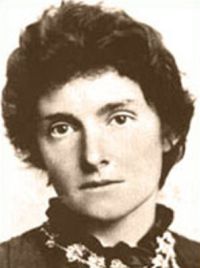
Portrait of E. Nesbit E. Nesbit Daphne in Fitzroy Street — XXI … (1909)

She would go and see the Russian, and be nice to Cousin Jane, just as she had intended to do. Tomorrow she would go—to sit for Him as usual. It he were there—ah, he must be there—then all would be well. Daphne felt that not in her presence could he renounce her.
What passes for courage consists far less in the facing of dangers and difficulties than in the ignoring of them, in the thrusting of them back to some dark-curtained corner of the mind, some secret drawer of the heart. One turns one’s eyes from them resolutely; resolutely facing the rest of life.
Source: Wikisource

Portrait of E. Nesbit E. Nesbit Daphne in Fitzroy Street — XXI … (1909)

Daphne was careful to sit where he could not observe her face. She feared his sympathetic intuition, the sympathetic intuition of a dog—a child—a Russian.
“You see me today convalescent,” he said. “The good Jane, she is a guard-ill altogether uncredible. She remains with me for always, is it not, my good Jane?”
“He will keep on like that,” said Cousin Jane—“and of course I’ll stay till he’s better. Is everything all right at home?”
“Oh, yes—as right as it can be without you,” Daphne answered, her eye on the door and her ears in the yard outside. Courage is courage: but hope, too, is hope.
Source: Wikisource

Portrait of E. Nesbit E. Nesbit Daphne in Fitzroy Street — XXI … (1909)

As drowning men are said, in the moment before death, to see all their lives spread out like a scroll before their eyes, so now Daphne. Catching at the heart that seemed to have shrunk till it was too small for the empty space about it, came old dreams, old memories—the school life, the happy hopes of this new life in London—thoughts of Doris, of Cousin Jane, even of Aunt Emily’s fancy work, and Uncle Harold’s sal volatile.
Source: Wikisource

Get perspective with Kwize: daily news enlightened by great literature