Summary

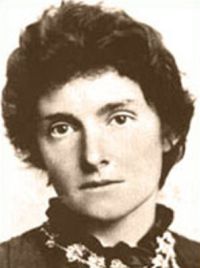
Portrait of E. Nesbit E. Nesbit Salome and the Head — 4. The False Moustache (1909)

Templar, his coat collar turned up, and wearing, with incredible self-consciousness, the false moustache, left his taxi-cab in the street and went up the mews to lounge opposite the garage door. The gas-light shone full into the motor brougham. It was empty.
But it couldn’t be empty! Two women and a lot of bundles might conceivably contrive to get out of a growler going at the snail’s pace possible only to those decaying vehicles—but to get out of a going—a rapidly going motor—in crowded London streets, unobserved! It was impossible.
Source: Wikisource

Portrait of E. Nesbit E. Nesbit Salome and the Head — 4. The False Moustache (1909)

Templar was sorry already—as a man is sorry who has made a fool of himself, to no purpose. To no purpose? Not wholly. The suggestion of the country house stayed and stuck. He had no chance of finding her country house. But he did know the country house of Pan. Pan was a bumpkin—a Cockney bumpkin, if such a thing could be. He would be amenable, malleable. The nymph in the forest had twisted him round her little finger. Mr. Templar, as yet, knew no difference between his little finger and the little finger of Salome.
Source: Wikisource

Portrait of E. Nesbit E. Nesbit Salome and the Head — 4. The False Moustache (1909)

He had spent a week in researches: and four evenings of that week he had, from his stall, seen her dance her forest dance to Pan’s piping. But he had not seen her dance the Salome dance. The idea of it revolted him—seemed vulgar, common, profane.
He had called on Mr. Mosenthal, the house-agent, on a pretence which he hoped was not altogether transparent, of wanting a flat of four rooms with kitchen and bathroom, hot and cold water laid on, in an old house in a good neighbourhood, for £30 a year. He saw Mr. Mosenthal’s clerk, and made cautious inquiries as to the tenants of the house.
Source: Wikisource

Get perspective with Kwize: daily news enlightened by great literature