Summary

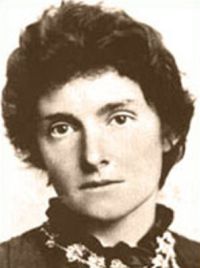
Portrait of E. Nesbit E. Nesbit Salome and the Head — 12. Miss Steinhart Shops (1909)

Miss Steinhart couldn’t carry those off—nor could Sylvia leave them behind.
It was plain that she must have another chauffeur. But. . . yes, she knew all that. All the same, there must be some man she could trust.
In one of those inspirations that only real talent knows and only real genius trusts, she thought of the driver of the taxicab from the stand in Trafalgar Square, who already on at least three occasions—two of Forrester’s influenza, and one of his failure to receive a letter—had driven her. She liked his face.
Source: Wikisource

Portrait of E. Nesbit E. Nesbit Salome and the Head — 12. Miss Steinhart Shops (1909)

THE LAST REHEARSAL “This one,” he said quietly, and struck himself on the breast. “This one—the one that loves you best, Sandra—best of them all. Though they all love you, of course,” he added in a vague, troubled note—“all of them, even the furthest—the one that we just can’t see.”
“Dear Denny,” she said, and “Dear Denny,” again. Then she jumped up.
“Play something new,” she said, “something of your own, something very beautiful indeed. I want to invent a new dance—a happy love-dance. I’ve never tried that.”
Source: Wikisource

Portrait of E. Nesbit E. Nesbit Salome and the Head — 12. Miss Steinhart Shops (1909)

She became the white-haired lady, and went out through a door expressly contrived to lead her, through a short passage, to the first floor of Uncle Mosenthal’s house, there to emerge boldly onto the landing by a door on which the name of Miss Gertrude Steinhart, Palmist, shone in white letters. She sent off her telegram, and then with a self-control that was its own reward, shopped.
If nothing had happened—and of course nothing had,—then Sandra Mundy was to be married almost at once—and Sandra Mundy’s wardrobe would never do for Sandra Templar.
Source: Wikisource

Get perspective with Kwize: daily news enlightened by great literature