Summary

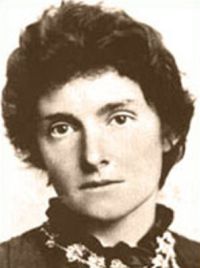
Portrait of E. Nesbit E. Nesbit Salome and the Head — 19. Release (1909)

The great gates open, and tired people come out, blinking, into the light. Sometimes they come out into a world where no one but the police wants them. It must be a terrible thing to be wanted by no one but the police.
But sometimes it happens that a man coming out of hell finds heaven waiting for him, hands that implore his hands—a face that his coming illuminates, as a candle lights up a Chinese lantern—eyes that see nothing in the world but his face, a heart that beats at his coming to a tune of wild gladness.
Source: Wikisource

Portrait of E. Nesbit E. Nesbit Salome and the Head — 19. Release (1909)

The House With No Address was indeed no more. Its history, its architecture, its mechanical contrivances, its secret passage, its approaches, its inmates, had been for a day the admiration and despair of the congested Press. And the crowds that gathered before the fronts of the houses that concealed it, and the mews with the mysterious garage, had to be controlled and moved on by the police.
Our drama is as improbable as life itself. Can one label it more definitely? Its penultimate scene is at the Ringwood house, where the Aunt and the uncle toast their feet at the apple-wood fire.
Source: Wikisource

Portrait of E. Nesbit E. Nesbit Salome and the Head — 19. Release (1909)

He went to prison for us—for me and you.”
“Oh—that’s the man, is it?” said Templar. “Well—two years is pretty light for a forger and. . .”
“There’s no sentence for cowards,” she said.
“Sandra, I love you,” he cried, in a last appeal. He knew it to be vain, but the situation demanded it.
“And I,” she said, “love the man who sacrificed everything for me. And when he comes out of prison I shall be at the gate. And if he’ll have me, I shall marry him.”
“Ah,” said Templar, the cur rampant in him. “And you’ll be Lady Ferrier someday, won’t you? That’s always something.”
Source: Wikisource

Get perspective with Kwize: daily news enlightened by great literature