Summary

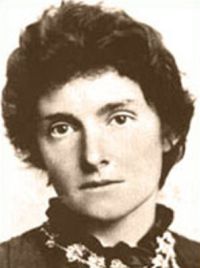
Portrait of E. Nesbit E. Nesbit Salome and the Head — 11. The Love-Night (1909)

Her arm went round his neck, and she rested there. And so they sat, in a silence electric with his passion. In her, only a faint, not-understood longing troubled the joy of that silence—the longing to do everything for him, to be everything to him, to give him everything he wanted, to make him happy. This longing, in the breast of a woman who loves is as tinder to the spark of man’s desire—and thus are kindled the great fires that burn down cities, and lay waste happy fields.
Source: Wikisource

Portrait of E. Nesbit E. Nesbit Salome and the Head — 11. The Love-Night (1909)

In the passage under the lift she whistled through a speaking-tube to Forrester above, giving him his orders.
“The lift’s coming now,” she said. “Goodbye! Good-bye!—till Sunday.”
There was a respectfully resentful something in Forrester’s manner as he adjusted the steel bars of the motor brougham, which forced Templar to say, quite without meaning to:
“Your mistress and I are engaged to be married.” He found it comforting to add: “She wishes to see you as soon as possible, to arrange for some woman to come and sleep in the house to-night. It is not right that she should be alone here.”
Source: Wikisource

Portrait of E. Nesbit E. Nesbit Salome and the Head — 11. The Love-Night (1909)

The worst of saying you are hungry when you are not—or of telling any other lie, for that matter—is that you have to live up to it. Sandra heaped chicken on his plate—like all women, Sandra adored chicken—and it was not the chicken’s fault if it tasted to him like sawdust. But there was a satisfaction in waiting on her; and the gentle intimacy of the meal eaten together helped him in more ways than one.
They cleared the table, and the carriage clock announced with some asperity that it was one o’clock.
Source: Wikisource

Get perspective with Kwize: daily news enlightened by great literature