Summary

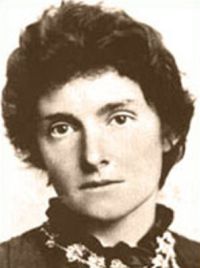
Portrait of E. Nesbit E. Nesbit Salome and the Head — 5. The Disaster (1909)

The landlord of the Anchor is a just man, and apportions the beauty of his grounds fairly among his clients.
The morning being a prince of mornings, even for June, Mr. Templar ate his eggs and bacon in the garden, drank there his three cups of tea, and there leaned back and smoked the after-breakfast pipe. There were birds singing in the alders opposite; the river, decorated with sunlight, looked warm and brown, like the shallow pools whose warmness quite shocks you when you dangle your feet in them from seaweed-covered rocks.
Source: Wikisource

Portrait of E. Nesbit E. Nesbit Salome and the Head — 5. The Disaster (1909)

He made his painter fast to the post of the tarred gate that lies across the towing path a stone’s-throw from the lock, shouldered the crow-bar and set out to get the sluice gates up. He was an engineer, and to an engineer, the Medway locks of course present no difficulties. Not so if you should be a stockbroker, or an artist, or a city clerk, or a poet. In those cases the crow-bar and the sluice gates combine to laugh at your inexperience, and bite pieces out of your fingers.
Source: Wikisource

Portrait of E. Nesbit E. Nesbit Salome and the Head — 5. The Disaster (1909)

Having dropped it, he caught at it with commendable speed, and thus got his fingers under the pin just at the instant when the heavy sluice, shaken by the impact of the boat, shuddered and slipped back into its old place. The crow-bar splashed in the lock below, as the pin came down across his fingers, with all the weight of the sluice to hold it there.
There was only one thing to be said—if one spoke at all. And it is not possible to the ordinary hero to bear, in silence, the smashing down on his fingers of an iron pin enforced by the weight of a heavy sluice gate.
Source: Wikisource

Get perspective with Kwize: daily news enlightened by great literature