Summary

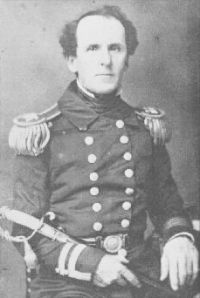
Portrait of William Francis Lynch William Francis Lynch Narrative Of The United States Expedition To The River Jordan And The Dead Sea… (1849)

But neither the beauty of the night, the wild scene around, the bold hills, between which the river rushed and foamed, a cataract, nor moon-light upon the ruined villages, nor tents pitched upon the shore, watch-fires blazing, and the Arab bard singing sadly to the sound of his rebabeh, could, with all the spirit of romance, keep us long awake.
Source: Wikisource

Portrait of William Francis Lynch William Francis Lynch Narrative Of The United States Expedition To The River Jordan And The Dead Sea… (1849)

Above was the whirlpool; abreast, and winding below, glancing in the moonlight, was the silvery sheen of the river; and high up, on each side, were the ruined villages, whence the peaceful fellahin had been driven by the predatory robber. The whooping of the owl above, the song of the bulbul below, were drowned in the onward rush and deafening roar of the tumultuous waters.
Source: Wikisource

Portrait of William Francis Lynch William Francis Lynch Narrative Of The United States Expedition To The River Jordan And The Dead Sea… (1849)

The wild and savage looking inhabitants rushed from their hovels and clambered up their dirt heaps to see the gallant sight — the swarthy Bedouin, the pale Franks, and the laden camels. Still further on, we passed the ruins of two Arab villages, one on each side of the Jordan, and upon elevations of corresponding height, ‘Delhemiyeh’ and ‘Bak’ah.’
“Below these villages, and close upon the Jordan’s bank, where the river in places foamed over its rocky bed with the fury of a cataract, we pitched the camp. Here we were to await the arrival of the boats.
Source: Wikisource

Get perspective with Kwize: daily news enlightened by great literature