Summary

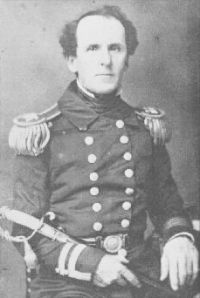
Portrait of William Francis Lynch William Francis Lynch Narrative Of The United States Expedition To The River Jordan And The Dead Sea… (1849)

Our Arabs were such pilferers that we were obliged to keep a most vigilant watch over everything, except the pork, which, being an abomination to the Muslim, was left about the camp, in full confidence that it would be untouched.
At 8:30, there was a light breeze from the south-west — no clouds visible-a, pale-blue misty appearance over the sea. At 9, the wind shifted to the north and blew strong; forced to strengthen the tent-stakes and pile stones upon the canvass eaves. The moon rose clear.
Source: Wikisource

Portrait of William Francis Lynch William Francis Lynch Narrative Of The United States Expedition To The River Jordan And The Dead Sea… (1849)

P.M. We again noticed a current, setting to the northward along the shore, and one farther out, setting to the southward. The last was no doubt the impetus given by the Jordan, and the former its eddy, deflected by Usdum and the southern shore of the sea. Arranged with Sherîf that he should remain here, in charge of our camp. The scene at sunset was magnificent; the wild, mighty cliffs above us, the dull, dead sea, and the shadows climbing up the eastern mountains. And there was Kerak, castled upon the loftiest summit of the range.
Source: Wikisource

Portrait of William Francis Lynch William Francis Lynch Narrative Of The United States Expedition To The River Jordan And The Dead Sea… (1849)

The mind cannot conceive a more dreary scene, or an atmosphere more stifling and oppressive. The reverberation of heat and light from the chalk-like hills and the salt beach was almost insupportable.
Walking up the beach we saw the tracks of a hyena, and another animal which we did not recognise, and soon after the naked footprints of a man. To the eastward of the point is a deep bay indenting the peninsula from the north.
Source: Wikisource

Get perspective with Kwize: daily news enlightened by great literature