Summary

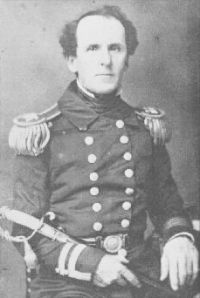
Portrait of William Francis Lynch William Francis Lynch Narrative Of The United States Expedition To The River Jordan And The Dead Sea… (1849)

At 8 P.M., went down to the beach and looked long and anxiously but could see nothing of them, although a dark object could have been discerned at a great distance, for the surface of the sea was one wide sheet of phosphorescent foam, and the waves, as they broke upon the shore, threw a sepulchral light upon the dead bushes and scattered fragments of rock. Returned to the camp and placed every one on guard, for all our men but one being absent in the boats, our weakness, if coupled with want of vigilance, might invite an attack from the strange Arabs, who, we knew, were upon the cliffs above.
Source: Wikisource

Portrait of William Francis Lynch William Francis Lynch Narrative Of The United States Expedition To The River Jordan And The Dead Sea… (1849)

We were struck with the almost total absence of round stones and pebbles upon the beach-the shore is covered with small angular fragments of flint. Started two partridges of a beautiful stone-colour, so much like the rocks, that they could only be distinguished when in motion. Heard the notes of a solitary bird in the cane-brake, which we could not identify. The statement that nothing can live upon the shores of the sea, is, therefore, disproved. The home and the usual haunt of the partridge may be among the cliffs above, but the smaller bird we heard must have its nest in the thicket.
Source: Wikisource

Portrait of William Francis Lynch William Francis Lynch Narrative Of The United States Expedition To The River Jordan And The Dead Sea… (1849)

Ascending a slight elevation, they traversed a plain encrusted with salt, and sparsely covered with sour and saline bushes, some dead and withered, and snapping at the slightest touch given them in passing. They noticed many cavernous excavations in the hill-sides, — the dwelling-places of the Israelites, of early Christians, and of hermits during the time of the Crusades.*, They at length reached a sloping, dark-brown sand, forming the beach of the Dead Sea, and followed it to El Feshkha. Our Arabs feared wild beasts, but there is nothing for one to live on, in these untenanted solitudes.
Source: Wikisource

Get perspective with Kwize: daily news enlightened by great literature