Summary

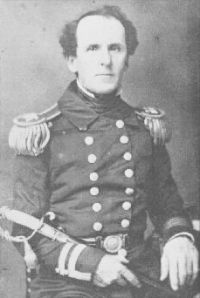
Portrait of William Francis Lynch William Francis Lynch Narrative Of The United States Expedition To The River Jordan And The Dead Sea… (1849)

Across the ravine, they saw a young camel browsing among the brown fringe and stunted bushes, which, in these plains, serve to protect the scanty vegetation from the intense heat of the sun. This creature had evidently strayed from some fellahin encampment, or had been abandoned by its owners when pursued by the Bedouin, many of whom they had seen the day previous on the eastern side of the Jordan. The camel being quite wild, racked off at full speed on their approach, and the scouts immediately started in pursuit.
Source: Wikisource

Portrait of William Francis Lynch William Francis Lynch Narrative Of The United States Expedition To The River Jordan And The Dead Sea… (1849)

And the rolling sand-hills, which form the surface of the upper plain, stretched far along the bases of the mountains without a mark of cultivation, or the shelter of a tree. Heretofore, we had seen patches of grain, but there were none now visible, and all before us was the bleakness of desolation.
The banks of the river, too, were less verdant, except immediately upon the margin, and the vegetation was mostly confined to the ghurrah, the tamarisk, and the cane; the oleander and the asphodel no longer fringed the margin, and the acacia was nowhere seen upon the bordering fields.
Source: Wikisource

Portrait of William Francis Lynch William Francis Lynch Narrative Of The United States Expedition To The River Jordan And The Dead Sea… (1849)

Long before the sun had risen over the mountains of Gilead, the whole encampment was astir, and all was haste, for there was a long day’s work before us. Although the air was damp and chilly, we knew, from past experience, that before noon the sun would blaze upon us with a power sufficient to carbonize those who should be unprotected from its fierceness.
Source: Wikisource

Get perspective with Kwize: daily news enlightened by great literature