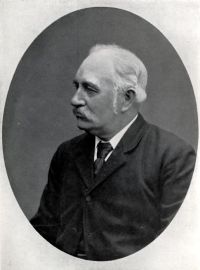
Edward Leader Williams

Edward Leader Williams

Summary

Portrait of Edward Leader Williams Edward Leader Williams 1911 Encyclopædia Britannica (1911)

Construction.—In laying out a line of canal the engineer is more restricted than in forming the route of a road or a railway. Since water runs downhill, gradients are inadmissible, and the canal must either be made on one uniform level or must be adapted to the general rise or fall of the country through which it passes by being constructed in a series of level reaches at varying heights above a chosen datum line, each closed by a lock or some equivalent device to enable vessels to be transferred from one to another.
Source: Wikisource

Portrait of Edward Leader Williams Edward Leader Williams 1911 Encyclopædia Britannica (1911)

Again, since the consumption of water in lockage increases both with the size of the locks and the frequency with which they are used, the difficulty of finding a sufficient water supply may put a limit to the density of traffic possible on a canal or may prohibit its locks from being enlarged so as to accommodate boats of the size necessary for the economical handling of the traffic under modern conditions. It may be pointed out that the up consumes more water than the down traffic.
Source: Wikisource

Portrait of Edward Leader Williams Edward Leader Williams 1911 Encyclopædia Britannica (1911)

Before the construction of the canal, large manufacturers had left Manchester to establish their works at ports like Glasgow, where they could save the cost of inland carriage. Since its opening, new industries have been started at Manchester and along its banks, warehouses and mills that were formerly empty are now occupied, while nearly 10,000 new houses have been built for the accommodation of the workpeople required to meet the enlarged trade of the city.
Source: Wikisource

Get perspective with Kwize: daily news enlightened by great literature