Summary

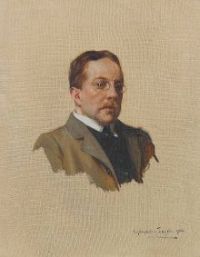
Portrait of E. W. Hornung E. W. Hornung Raffles — The Knees of the Gods (1906)

The man smoked steadily, and the hungry horses did what I never saw horses do before; they stood and nibbled at each other's tails. I was used to sleeping in the open, under the jewelled dome that seems so much vaster and grander in these wide spaces of the earth. I lay listening to the horses, and to the myriad small strange voices of the veldt, to which I cannot even now put a name, while Raffles watched. "One head is better than two," he said, "when you don't want it to be seen."
Source: Wikisource

Portrait of E. W. Hornung E. W. Hornung Raffles — The Knees of the Gods (1906)

Yet a more kind-hearted woman I have never known. The war did not uplift our landlady as it did her lodgers.
But presently it ceased to have that precise effect upon us. Bad was being made worse and worse; and then came more than Englishmen could endure in that black week across which the names of three African villages are written forever in letters of blood. "All three pegs," groaned Raffles on the last morning of the week; "neck-and-crop, neck-and-crop!" It was his first word of cricket since the beginning of the war.
Source: Wikisource

Portrait of E. W. Hornung E. W. Hornung Raffles — The Knees of the Gods (1906)

It was an occasional crack, not a constant crackle, but the whistle of a bullet as it passed us by, or a tiny transitory flame for the one bit of detail on a blue hill-side, was an unpleasant warning that we two on ours were a target in ourselves. But Raffles paid no attention to their fire; he was pointing downward through the bushes to where Corporal Connal stood with his back to us, shooing a last charger out of the mouth of the donga towards the Boer trenches.
Source: Wikisource

Get perspective with Kwize: daily news enlightened by great literature