Summary

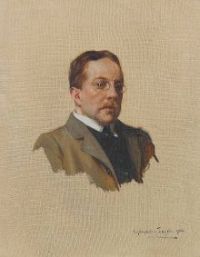
Portrait of E. W. Hornung E. W. Hornung Witching Hill — The Angel of Life (1913)

So, indeed, was I; for though a tear is nowhere more out of place than on the cheek of a trained nurse, yet in none is it such welcome evidence of human interest and affection. And there was the tender tact of the pretence to which she had lent herself before my eyes; even as a memory it nearly filled them afresh. Yet I could not speak of it to Coplestone, and to Delavoye I would not, lest I were led into betraying that which I had promised Ronnie to keep entirely to myself.
Source: Wikisource

Portrait of E. W. Hornung E. W. Hornung Witching Hill — The Angel of Life (1913)

I have not naturally a despondent temperament, but that night I for my part was wondering whether Ronnie would ever go to Eton at all. The delirious stage is always terrifying to the harrowed ignoramus watching by the bed; it is almost worse if one is down-stairs, trying not to listen, yet doing little else, and without the nurse's calm voice and experienced eyes to reassure one. That was how I spent that night. The delirium had begun the night before, and been intermittent ever since. But Coplestone was not terrified; he kept both nerve and spirits like a hero.
Source: Wikisource

Portrait of E. W. Hornung E. W. Hornung Witching Hill — The Angel of Life (1913)

What was most remarkable on these occasions was the way Coplestone drank his champagne, with the happy moderation of a man who has never exceeded in his life. There was now no shadow of excess, but neither was there any of the weakling's recourse to the opposite extreme of meticulous austerity. A doctor might have forbidden even a hair of the sleeping dog, but to us young fellows it was a joy to see our hero so completely his own man once more.
Source: Wikisource

Get perspective with Kwize: daily news enlightened by great literature