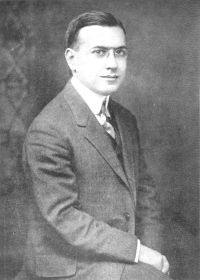
Earl Derr Biggers

Earl Derr Biggers

Summary

Portrait of Earl Derr Biggers Earl Derr Biggers A Lost Quixote (1913)

It seemed as if he and the silent Sharp played at gambling, with a rose wood wheel, an ivory ball, and make-believe chips for toys. Sharp's cigar had accommodatingly gone out; but, unlike the gamblers of fiction, he did not hold it between clinched teeth. Any perspiration on his brow was due to climatic conditions, and not to excitement over the game. To the landlord of the Crystal Palace the whole affair seemed a wearisome farce—one that must not end too soon.
Source: Wikisource

Portrait of Earl Derr Biggers Earl Derr Biggers A Lost Quixote (1913)

Then they sat, silent as the desert, Mr. Sharp seemingly as hot, while minute after minute ticked by, and the hands of the scratched and mutilated clock, back of the gambling lookout's empty chair, crept on toward the hour that must start the boy on his long, unhappy pilgrimage back to Indiana—alone. No sign of life was visible in the picture before them. In the shade of the station the agent was huddled, as soundly asleep as Doc Haywood, over his week old news.
Source: Wikisource

Portrait of Earl Derr Biggers Earl Derr Biggers A Lost Quixote (1913)

He turned sharply on the landlord of the Crystal Palace.
“What sort of a country is this out here,” he cried, “that makes a coward of an honest man? You yawp about your magnificent distances, and how they draw a man closer to his God. What about their drawin' him a hell of a ways from his wife?”
Mr. Sharp did not, with his accustomed fervor, come to the defense of his vaunted West. Instead he carefully studied the distant station-agent, nodding in the shadow of his shack over his copy of a San Francisco paper a week old.
Source: Wikisource

Get perspective with Kwize: daily news enlightened by great literature