Raymond S. Spears

Raymond S. Spears

Summary

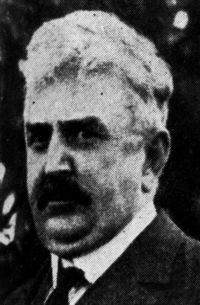
Portrait of Raymond S. Spears Raymond S. Spears Nature and Tim Betine (1917)

It was his own timber and his own land, to do as he pleased with.
Trees meant dollars to him; land meant acres and crops worth dollars. The sharp downfall in his little creek meant power; power meant turning saws, and a grist-mill, and perhaps an electric-light plant to make the valley shine so that work could go on night and day. If he could add an hour a day to the work, it would mean ten per cent more profit. If he could clear his land quickly it would mean so many more crops, and farm produce was on the rise.
Source: Wikisource

Portrait of Raymond S. Spears Raymond S. Spears Nature and Tim Betine (1917)

By the time the dam was built, all the overflow had been stripped clean of merchantable timber. The day he filled his mile-long pond was a great event in Tim Betine's life. There was the best float dam in the State; there was the best power-site he knew of, for a little jobber like himself to own; there was the foundation of a whole fleet of industries in the valley of Brown Creek.
Word of what he was doing was spread down below him in the valleys. "Tim Betine's Job," people called it.
Source: Wikisource

Portrait of Raymond S. Spears Raymond S. Spears Nature and Tim Betine (1917)

He put the farm-hands into the clearings from the log-camps, and rough-worked his land as fast as he could find space to plant.
He was doing so well with his coming crops that his mind began to soar with new ideas. He would have one great farm of twenty thousand acres. He would have machines to cultivate it, and have farm crews to do the labor, like his logging-gangs.
He would build himself a mansion, and from the steps of his house he would watch the work up the wide basin through good spy-glasses. He bought the glasses; he sawed and planed the lumber in his mill
Source: Wikisource

Get perspective with Kwize: daily news enlightened by great literature