Summary

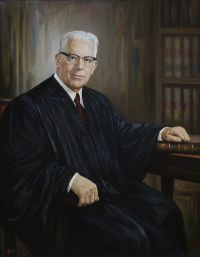
Portrait of Earl Warren Earl Warren Brotherhood of Maintenance of Way Employes v…

Rather, appellants' sole contention is that no compensation plan is adequate unless it is based on the premise that all the employees currently on the payroll remain in the surviving railroad's employ for at least the length of their previous employment up to four years. Appellants do not say that every employee must remain in his present job, but they do insist that some job must remain open for each one.
Source: Wikisource

Portrait of Earl Warren Earl Warren Brotherhood of Maintenance of Way Employes v…

In short, we are unwilling to overturn a long-standing administrative interpretation of a statute, acquiesced in by all interested parties for 20 years, when all the signposts of congressional intent, to the extent they are ascertainable, indicate that the administrative interpretation is correct. Consequently, the judgment of the District Court must be affirmed.
Source: Wikisource

Portrait of Earl Warren Earl Warren Brotherhood of Maintenance of Way Employes v…

Shortly before the Emergency Act expired in 1936, a great majority of the Nation's railroads and brotherhoods entered into the Washington Job Protection Agreement, [3] an industry-wide collective bargaining agreement which also specified conditions for the protection of employees in the event of mergers. Unlike the Emergency Act, however, the Washington Agreement provided for compensatory protection rather than the 'job freeze' previously prescribed.
Source: Wikisource

Get perspective with Kwize: daily news enlightened by great literature