Summary

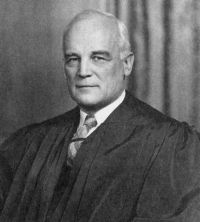
Portrait of Harold Hitz Burton Harold Hitz Burton Railway Labor Executives' Association v…

We are called upon to decide whether the Interstate Commerce Commission, in approving a consolidation of railroad facilities under § 5 (2) (f) of the Interstate Commerce Act, [1] has the power to extend the period of protection of the interests of the railroad employees beyond four years from the effective date of the order. For the reasons hereafter stated, we hold that the Commission has that power.
Source: Wikisource

Portrait of Harold Hitz Burton Harold Hitz Burton Railway Labor Executives' Association v…

The appellant and the United States [3] contend that the first sentence of § 5 (2) (f) requires the Commission to condition its approval upon a fair and equitable arrangement to protect the interests of railroad employees affected by this consolidation. They contend also that the second sentence prescribes a minimum of protection but does not restrict the Commission's power, under the first sentence, to prescribe further protection if such protection is deemed necessary to make the arrangement fair and equitable to the employees.
Source: Wikisource

Portrait of Harold Hitz Burton Harold Hitz Burton Railway Labor Executives' Association v…

The precursor of this provision was § 5 (4) (b) , as amended by the Emergency Railroad Transportation Act of 1933. That section authorized the Commission to approve consolidations 'upon the terms and conditions * * * found to be just and reasonable.' [5] There was, however, a widespread awareness in the railroad industry that many of the economies to be gained from consolidations or abandonments could be realized only at the expense of displaced railroad labor. The interests of such employees were recognized in the Washington Job Protective Agreement of 1936.
Source: Wikisource

Get perspective with Kwize: daily news enlightened by great literature