Summary

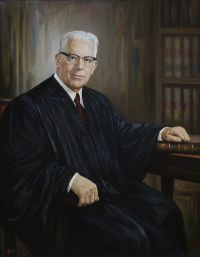
Portrait of Earl Warren Earl Warren Emspak v. United States — Opinion of the Court

If the witness intelligently and unequivocally waives any objection based on the Self-Incrimination Clause, or if the witness refuses a committee request to state whether he relies on the Self-Incrimination Clause, he cannot later invoke its protection in a prosecution for contempt for refusing to answer that question.
The Government argues that petitioner did in fact waive the privilege, at least as to one count of the indictment, and that the conviction can be sustained on that count alone.
Source: Wikisource

Portrait of Earl Warren Earl Warren Emspak v. United States — Opinion of the Court

On this basis the Government contends that petitioner's plea was not adequate. The answer to this contention is threefold. First, an objection that is sufficiently clear to reveal a probable intention to invoke the privilege cannot be ignored merely because it is not phrased in an orthodox manner. Second, if it is true that in these times a stigma may somehow result from a witness' reliance on the Self-Incrimination Clause, a committee should be all the more ready to recognize a veiled claim of the privilege.
Source: Wikisource

Portrait of Earl Warren Earl Warren Emspak v. United States — Opinion of the Court

That being so, it is immaterial that some of the questions sought information about associations that petitioner might have been able to explain away on some innocent basis unrelated to Communism. If an answer to a question may tend to be incriminatory, a witness is not deprived of the protection of the privilege merely because the witness if subsequently prosecuted could perhaps refute any inference of guilt arising from the answer.
Source: Wikisource

Get perspective with Kwize: daily news enlightened by great literature