Summary

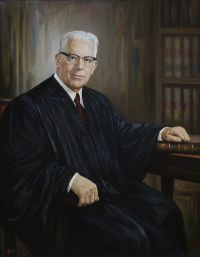
Portrait of Earl Warren Earl Warren Flast v. Cohen — Opinion of the Court

However, whenever such specific limitations are found, we believe a taxpayer will have a clear stake as a taxpayer in assuring that they are not breached by Congress. Consequently, we hold that a taxpayer will have standing consistent with Article III to invoke federal judicial power when he alleges that congressional action under the taxing and spending clause is in derogation of those constitutional provisions which operate to restrict the exercise of the taxing and spending power.
Source: Wikisource

Portrait of Earl Warren Earl Warren Flast v. Cohen — Opinion of the Court

When the emphasis in the standing problem is placed on whether the person invoking a federal court's jurisdiction is a proper party to maintain the action, the weakness of the Government's argument in this case becomes apparent. The question whether a particular person is a proper party to maintain the action does not, by its own force, raise separation of powers problems related to improper judicial interference in areas committed to other branches of the Federal Government.
Source: Wikisource

Portrait of Earl Warren Earl Warren Flast v. Cohen — Opinion of the Court

Standing has been called one of 'the must amorphous (concepts) in the entire domain of public law.' [18] Some of the complexities peculiar to standing problems result because standing 'serves, on occasion, as a shorthand expression for all the various elements of justiciability.' [19] In addition, there are at work in the standing doctrine the many subtle pressures which tend to cause policy considerations to blend into constitutional limitations.
Source: Wikisource

Get perspective with Kwize: daily news enlightened by great literature