Summary

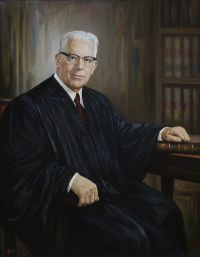
Portrait of Earl Warren Earl Warren National Labor Relations Board v…

Under the Board's current practice, an employer's good faith doubt is largely irrelevant, and the key to the issuance of a bargaining order is the commission of serious unfair labor practices that interfere with the election processes and tend to preclude the holding of a fair election. Thus, an employer can insist that a union go to an election, regardless of his subjective motivation, so long as he is not guilty of misconduct; he need give no affirmative reasons for rejecting a recognition request, and he can demand an election with a simple 'no comment' to the union.
Source: Wikisource

Portrait of Earl Warren Earl Warren National Labor Relations Board v…

We thus need not decide whether, absent election interference by an employer's unfair labor practices, he may obtain an election only if he petitions for one himself; whether, if he does not, he must bargain with a card majority if the Union chooses not to seek an election; and whether, in the latter situation, he is bound by the Board's ultimate determination of the card results regardless of his earlier good faith doubts, or whether he can still insist on a Union-sought election if he makes an affirmative showing of his positive reasons for believing there is a representation dispute.
Source: Wikisource

Portrait of Earl Warren Earl Warren National Labor Relations Board v…

Stating these obvious principles is but another way of recognizing that what is basically at stake is the establishment of a nonpermanent, limited relationship between the employer, his economically dependent employee and his union agent, not the election of legislators or the enactment of legislation whereby that relationship is ultimately defined and where the independent voter may be freer to listen more objectively and employers as a class freer to talk.
Source: Wikisource

Get perspective with Kwize: daily news enlightened by great literature