Summary

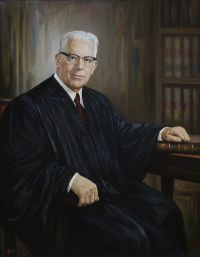
Portrait of Earl Warren Earl Warren Pierson v. Ray — Opinion of the Court (1967)

The common law has never granted police officers an absolute and unqualified immunity, and the officers in this case do not claim that they are entitled to one. Their claim is rather that they should not be liable if they acted in good faith and with probable cause in making an arrest under a statute that they believed to be valid. Under the prevailing view in this country a peace officer who arrests someone with probable cause is not liable for false arrest simply because the innocence of the suspect is later proved.
Source: Wikisource

Portrait of Earl Warren Earl Warren Pierson v. Ray — Opinion of the Court (1967)

It is a judge's duty to decide all cases within his jurisdiction that are brought before him, including controversial cases that arouse the most intense feelings in the litigants. His errors may be corrected on appeal, but he should not have to fear that unsatisfied litigants may hound him with litigation charging malice or corruption. Imposing such a burden on judges would contribute not to principled and fearless decisionmaking but to intimidation.
Source: Wikisource

Portrait of Earl Warren Earl Warren Pierson v. Ray — Opinion of the Court (1967)

It is necessary to decide what importance should be given at the new trial to the substantially undisputed fact that the petitioners went to Jackson expecting to be illegally arrested. We do not agree with the Court of Appeals that they somehow consented to the arrest because of their anticipation that they would be illegally arrested, even assuming that they went to the Jackson bus terminal for the sole purpose of testing their rights to unsegregated public accommodations.
Source: Wikisource

Get perspective with Kwize: daily news enlightened by great literature