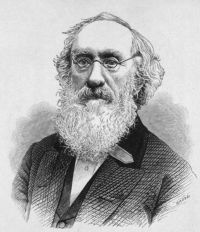
Edmund Bailey O'Callaghan

Edmund Bailey O'Callaghan

Summary

Portrait of Edmund Bailey O'Callaghan Edmund Bailey O'Callaghan Laws and ordinances of New Netherland… (1868)

For many years the only Courts in the Province of New Netherland, of which we have any record, were the Patroon’s Court of Rensselaerswyck, and that of the Director General and Council on Manhattan island, the latter of which took cognizance of actions of debt, whether for small or large amounts, and of criminal cases, from simple assaults to those of murder. It also acted as a Prerogatives or Surrogate Court, and as a Court of Admiralty. In fine, there was nothing too minute and nothing too important for its jurisdiction, and from its decisions there was no appeal.
Source: Wikisource

Portrait of Edmund Bailey O'Callaghan Edmund Bailey O'Callaghan Laws and ordinances of New Netherland… (1868)

Thus, that Classis may be considered as having been the Supreme Head of the Dutch Church in New Netherland.
The Reformed Religion, according to the doctrine promulgated by the Synod of Dort, was the established religion of New Netherland, and the magistrates were bound to maintain it against all sectaries. Although English settlers, either of the Presbyterian or Congregational Order, were granted freedom of conscience, and had their churches, yet the right of public worship was denied to all other denominations, if we except Lutherans, who after some struggle were allowed a Minister.
Source: Wikisource

Portrait of Edmund Bailey O'Callaghan Edmund Bailey O'Callaghan Laws and ordinances of New Netherland… (1868)

Catholics, Baptists, Quakers and Jews were alike ostracised, for none other than those of the Reformed religion, or persons at least well affected toward it, were admissible to office. By the laws of Holland, marriages between Protestants and Catholics, or between Christians and Jews, were subject to grievous penalties, Jews having no privileges except those of Burgherright and Trade. In New Netherland they were even denied that of defending the country in case of danger, owing to the "disgust and dislike of the mass of the Citizens to them as fellow soldiers."
Source: Wikisource

Get perspective with Kwize: daily news enlightened by great literature