Summary

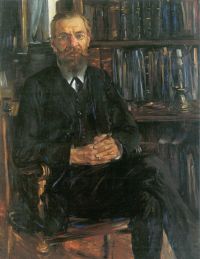
Portrait of Eduard Meyer Eduard Meyer 1911 Encyclopædia Britannica, Volume 20… (1911)

The principal ruins of the town of Pasargadae at Murghab are a great terrace like that of Persepolis, and the remainders of three buildings, on which the building inscription of Cyrus, “I Cyrus the king the Achaemenid” (sc. “have built this”) , occurs five times in Persian, Susian and Babylonian. They were built of bricks, with a foundation of stones and stone door-cases, like the palaces at Persepolis; and on these fragments of a procession of tribute-bearers and the figure of a winged demon (wrongly considered as a portrait of Cyrus) are preserved.
Source: Wikisource

Portrait of Eduard Meyer Eduard Meyer 1911 Encyclopædia Britannica, Volume 20… (1911)

The capital of Cyrus was soon supplanted by Persepolis, founded by Darius; but in Pasargadae remained a great treasury, which was surrendered to Alexander in 336 after his conquest of Persis (Arrian iii. 18, 10; Curt. v. 6, 10) . After his return from India he visited Pasargadae on the march from Carmania to Persepolis, found the tomb of Cyrus plundered, punished the malefactors, and ordered Aristobulus to restore it (Arrian vi. 29; Strabo xv. 730) . Aristobulus' description agrees exactly with the ruins of Murghab on the Bandamir, about 30 m. upwards from Persepolis
Source: Wikisource

Get perspective with Kwize: daily news enlightened by great literature