Summary

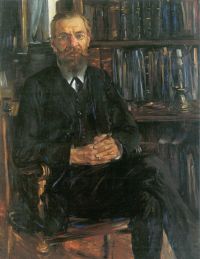
Portrait of Eduard Meyer Eduard Meyer 1911 Encyclopædia Britannica, Volume 21… (1911)

But Persis lies too far off from the centre of the Asiatic world to be the seat of government. Like Arabia and similar countries, it could exercise a great momentary influence in history and produce a sudden change throughout the world; but afterwards it would sink into local insignificance. So the Persian kings fixed their residence at Susa, which is always considered as the capital of the empire (therefore Aeschylus wrongly considers it as a Persian town and places the tomb of Darius here) .
Source: Wikisource

Portrait of Eduard Meyer Eduard Meyer 1911 Encyclopædia Britannica, Volume 21… (1911)

Herod. vii. 85) are nomads. The kings of the Pasargadae, from the clan of the Achaemenidae, had become kings of the Elamitic district Anshan (probably in 596, cf. Cyrus) . When, in 553, Cyrus, king of Anshan, rebelled against Astyages, the Maraphians and Maspians joined with the Pasargadae; after his victory over Astyages all the Persian tribes acknowledged him, and he took the title of “king of Persia.” But from then only the inhabitants of Persis proper were considered as the rulers of the empire, and remained therefore in the organization of Darius free from taxes (Herod. iii. 97) .
Source: Wikisource

Portrait of Eduard Meyer Eduard Meyer 1911 Encyclopædia Britannica, Volume 21… (1911)

But Carmania, with the Sagartians, the Utians (called by Darius Yautiya) , and other tribes, formed a satrapy and paid tribute (Herod. iii. 93) , the later authors therefore always distinguished between Carmania and Persis. Names of other Persian tribes, partly of very doubtful authority, are given by Strabo xv. 727, [1] and Ptolem. vi. 4 and 8.
The Persians of Cyrus (see Persia: Ancient History) were a vigorous race of husbandmen, living in a healthy climate, accustomed to hardship, brave and upright
Source: Wikisource

Get perspective with Kwize: daily news enlightened by great literature