Summary

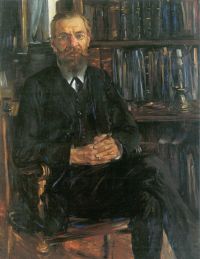
Portrait of Eduard Meyer Eduard Meyer 1911 Encyclopædia Britannica, Volume 7… (1911)

The left wing of the Persians under Tissaphernes avoided a serious conflict with the Greeks; Cyrus in the centre threw himself upon Artaxerxes, but was slain in a desperate struggle. Afterwards Artaxerxes pretended to have killed the rebel himself, with the result that Parysatis took cruel vengeance upon the slayer of her favourite son. The Persian troops dared not attack the Greeks, but decoyed them into the interior, beyond the Tigris, and tried to annihilate them by treachery. But after their commanders had been taken prisoners the Greeks forced their way to the Black Sea.
Source: Wikisource

Portrait of Eduard Meyer Eduard Meyer 1911 Encyclopædia Britannica, Volume 7… (1911)

In a short time he, the petty prince of an almost unknown tribe, had founded a mighty empire, which extended from the Indus and Jaxartes to the Aegaean and the borders of Egypt. This result shows that Cyrus must have been a great warrior and statesman. Nor is his character without nobility. He excels in the humanity with which he treated the vanquished.
Source: Wikisource

Portrait of Eduard Meyer Eduard Meyer 1911 Encyclopædia Britannica, Volume 7… (1911)

Cyrus had 10,400 Greek hoplites and 2500 peltasts, and besides an Asiatic army under the command of Ariaeus, for which Xenophon gives the absurd number of 100,000 men; the army of Artaxerxes he puts down at 900,000. These numbers only show that he, although an eyewitness, has no idea of large numbers; in reality the army of Cyrus may at the very utmost have consisted of 30,000, that of Artaxerxes of 40,000 men. Cyrus saw that the decision depended on the fate of the king; he therefore wanted Clearchus, the commander of the Greeks, to take the centre against Artaxerxes.
Source: Wikisource

Get perspective with Kwize: daily news enlightened by great literature