Summary

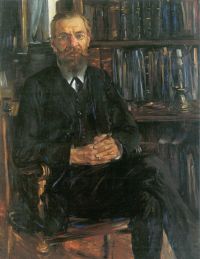
Portrait of Eduard Meyer Eduard Meyer 1911 Encyclopædia Britannica, Volume 18… (1911)

Probably they were chieftains of a nomadic Median tribe in the desert, the Manda, mentioned by Sargon; for the Babylonian king Nabonidus designates the Medians and their kings always as Manda. The origin and history of the Median Empire is quite obscure, as we possess, almost no contemporary information, and not a single monument or inscription from Media itself. Our principal source is Herodotus, who wrongly makes Deioces the first king and uniter of the whole nation, and dates their independence from c. 710—i.e. from the time when the Assyrian supremacy was at its height.
Source: Wikisource

Portrait of Eduard Meyer Eduard Meyer 1911 Encyclopædia Britannica, Volume 18… (1911)

In the second half of the 7th century the Medians gained their independence and were united by a dynasty, which, if we may trust Herodotus, derived its origin from Deioces (q.v.) , a Median chieftain in the Zagros, who was, with his kinsmen, transported by Sargon to Hamath (Hamah) in Syria in 715 B.C. The kings, who created the Median Empire, were Phraortes and his son Cyaxares.
Source: Wikisource

Portrait of Eduard Meyer Eduard Meyer 1911 Encyclopædia Britannica, Volume 18… (1911)

About the internal organization of the Median Empire, we know only that the Greeks derive a great part of the ceremonial of the Persian court, the costume of the king, &c., from Media. But it is certain that the national union of the Median clans was the work of their kings; and probably the capital Ecbatana (q.v.) was created by them.
By the rebellion of Cyrus, king of Persia, against his suzerain Astyages, the son of Cyaxares, in 553, and his victory in 550, the Medes were subjected to the Persians. In the new empire they retained a prominent position
Source: Wikisource

Get perspective with Kwize: daily news enlightened by great literature